Best Flooring for Dogs in a Busy Family Home
A dog can turn a beautiful new floor into a real-world stress test quickly. Wet paws at the back door, claws skittering around corners, dropped water bowls, and the occasional accident all ask more of a floor than a showroom sample can reveal. The best flooring for dogs is not simply the hardest surface available. It is the material that fits your dog, your household routines, and the rooms you are renovating.
For homeowners planning a main-floor remodel, basement renovation, or targeted flooring upgrade, the right decision protects both your investment and the way your family lives. Durability matters, but so do traction, water resistance, comfort, maintenance, and a finish that still feels like home.
What Makes Flooring Dog-Friendly?
A dog-friendly floor should handle four common challenges: scratching, moisture, slipping, and daily cleaning. No material is completely indestructible, especially in a busy home with large or energetic dogs. The goal is to choose a surface that wears gracefully and is practical to repair or replace if needed.
Scratch resistance is usually the first concern, but it should not be the only one. A very hard, glossy floor may resist marks while offering poor grip for an older dog. A soft surface may feel warmer underfoot but show claw marks sooner. The best choice balances these trade-offs rather than chasing a single feature.
Room use also changes the answer. A kitchen or entryway needs strong water resistance. A finished basement may benefit from a warmer, more forgiving surface. In an open-concept main floor, visual continuity with cabinetry, stairs, and trim can be just as important as performance.
Best Flooring for Dogs: Top Materials Compared
Luxury Vinyl Plank
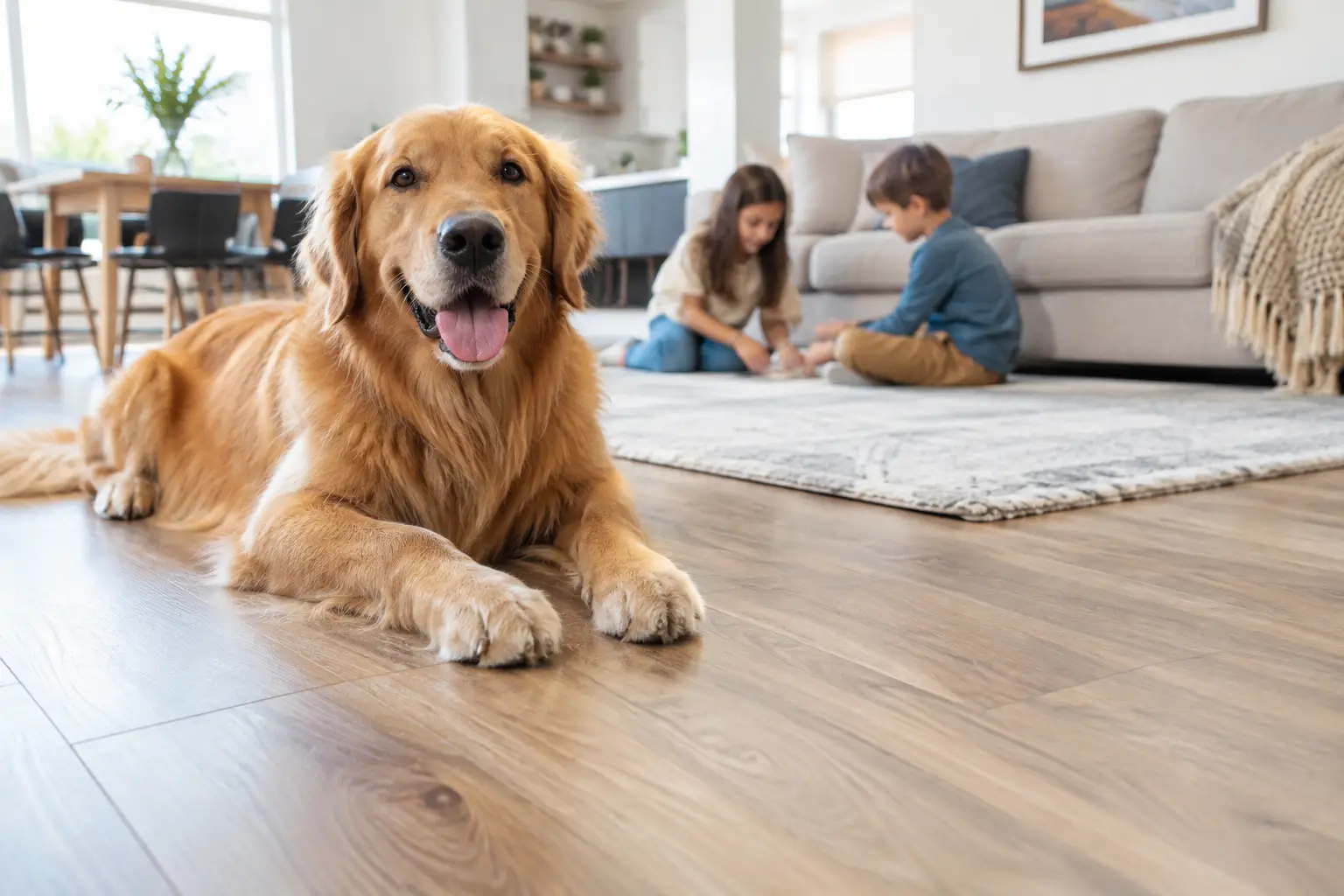
Luxury vinyl plank, often called LVP, is one of the strongest all-around choices for dog-owning households. Quality products are water-resistant or waterproof, easy to wipe clean, and available in realistic wood and stone looks. A textured, low-sheen finish can also provide better traction than a polished hard surface.
Its protective wear layer helps with everyday claw traffic, although sharp grit caught under paws can still leave marks over time. Look for a commercial-grade wear layer and avoid highly glossy finishes that highlight scratches and paw prints. LVP is particularly practical for kitchens, mudrooms, basement family rooms, and busy main floors where spills are part of daily life.
Installation matters. A properly prepared subfloor prevents movement, gaps, and uneven areas that can reduce the floor’s lifespan. In a renovation, this is also the right time to address transitions, baseboards, and moisture conditions below the finished surface.
Porcelain Tile
Porcelain tile is exceptionally durable, highly water-resistant, and difficult for claws to damage. It is a reliable option for entryways, bathrooms, laundry rooms, mudrooms, and homes where dogs regularly come in from rain or snow. When installed correctly, tile can serve a household for decades.
The trade-off is comfort. Tile is hard and can feel cold, particularly during Ontario winters. It may also be slippery if you select a polished finish. Choose a matte or textured porcelain tile with appropriate slip resistance, and consider radiant floor heating where the room and budget support it. Area rugs with secure, non-slip backings can add comfort without creating a tripping hazard.
Grout deserves attention, too. A darker or mid-tone grout is often easier to maintain than bright white, especially near exterior doors. Quality grout sealing and careful installation protect the finish and simplify cleaning.
Engineered Hardwood
Many homeowners still want the warmth and character of real wood, and engineered hardwood can work well with dogs when selected carefully. Its layered construction provides more stability than solid hardwood in spaces where humidity changes, making it a sensible choice for many main-floor renovations.
However, wood is not the lowest-maintenance option for a home with active pets. Claws, grit, and water can leave evidence over time. Choose a harder wood species, a durable factory finish, and a matte or wire-brushed texture that helps disguise minor wear. Wider planks with natural variation can also make small marks less noticeable than a smooth, dark, high-gloss floor.
Avoid treating engineered hardwood as waterproof. Wipe spills promptly, place mats at entrances, and keep nails trimmed. If a perfectly untouched floor is the priority, vinyl or porcelain will generally be a safer choice. If you value the natural look of wood and accept the patina of a lived-in home, engineered hardwood remains a beautiful option.
Laminate Flooring
Modern laminate has improved significantly in both appearance and scratch resistance. It can be a cost-conscious choice for dry living areas, bedrooms, and some upper-level spaces. A textured laminate with a strong AC rating can stand up well to everyday claw traffic.
Moisture is the deciding factor. Traditional laminate can swell or separate when water reaches its core, so it is less forgiving around water bowls, exterior doors, and accident-prone areas. Water-resistant laminate offers better protection, but it still requires prompt cleanup and careful installation at edges and transitions.
For a household with one calm dog and a consistent cleaning routine, laminate can offer good value. For multiple dogs, frequent wet paws, or a busy kitchen, LVP usually provides more peace of mind.
Flooring Choices That Need Extra Care
Solid hardwood is timeless, but it is vulnerable to scratches, dents, and moisture. It can still be the right choice in a formal living space or a carefully managed home, particularly if you prefer a finish that can be refinished in the future. Just expect it to develop character over time.
Carpet gives dogs a soft, quiet place to rest, but it is the least practical material for accidents, shedding, and odors. If carpet is important for bedrooms or a basement lounge, choose a low-pile, stain-resistant style and use a moisture-resistant pad. Replaceable carpet tiles can be a useful alternative in select spaces because individual damaged sections can be changed without redoing the whole room.
Natural stone varies widely. Some stones are porous and require regular sealing, while polished surfaces can be slick. Porcelain often delivers the stone look with fewer maintenance concerns.
Details That Protect Your New Floor
The material is only part of the plan. Good renovation decisions account for the conditions around the floor as well. Keep your dog’s nails trimmed, use absorbent mats inside exterior doors, and place a waterproof mat beneath water bowls. Clean grit quickly, since sand and salt are often more damaging than claws alone.
Finish selection is equally valuable. Light-to-medium tones, natural grain patterns, and low-sheen surfaces tend to hide dust, hair, and minor scratches better than dark, uniform, glossy floors. This is especially useful in open-concept spaces where sunlight can make every mark visible.
For older dogs or breeds prone to joint concerns, traction should be a priority. A floor that is easy to clean but difficult to stand on is not a successful long-term choice. Textured vinyl, matte porcelain, and carefully selected wood finishes offer a more secure feel than slick polished surfaces.
Plan Flooring as Part of the Whole Renovation
Flooring decisions affect more than the finished look. They can change floor height, door clearances, stair transitions, cabinetry installation, bathroom waterproofing, and the performance of radiant heating. In older homes, subfloor leveling and moisture management may be just as critical as the product you choose.
A coordinated renovation team can assess these details before installation begins, helping prevent costly corrections later. At Finishing Touches Design & Renovations, flooring is planned in context with the full scope of the home, from layout changes and tile work to trim, stairs, and final finishes.
Before selecting samples, think about where your dog sleeps, enters the house, eats, plays, and spends time after a walk. The most successful floor is the one that supports those daily habits without asking your family to live cautiously around it.