Staircase Refinishing That Changes Your Main Floor
A worn staircase has a way of making an otherwise updated main floor feel unfinished. Scuffed treads, orange-toned wood, peeling paint, loose railings, and mismatched balusters all sit at the center of the home, where family and guests see them every day. Thoughtful staircase refinishing can change that impression without requiring a full rebuild, bringing warmth, durability, and a more cohesive design to the spaces around it.
For homeowners in Toronto, Etobicoke, and the GTA, the best result is rarely about applying a new stain alone. It starts with an honest assessment of the stair structure, the surrounding flooring, safety requirements, and how the staircase needs to perform for the people who use it.
Why the Staircase Has Such a Big Impact
A staircase is both a circulation route and a prominent architectural feature. In many two-story homes, it is visible from the front entry, living room, dining room, and upper hallway. That makes its finish a major factor in whether a renovation feels intentional.
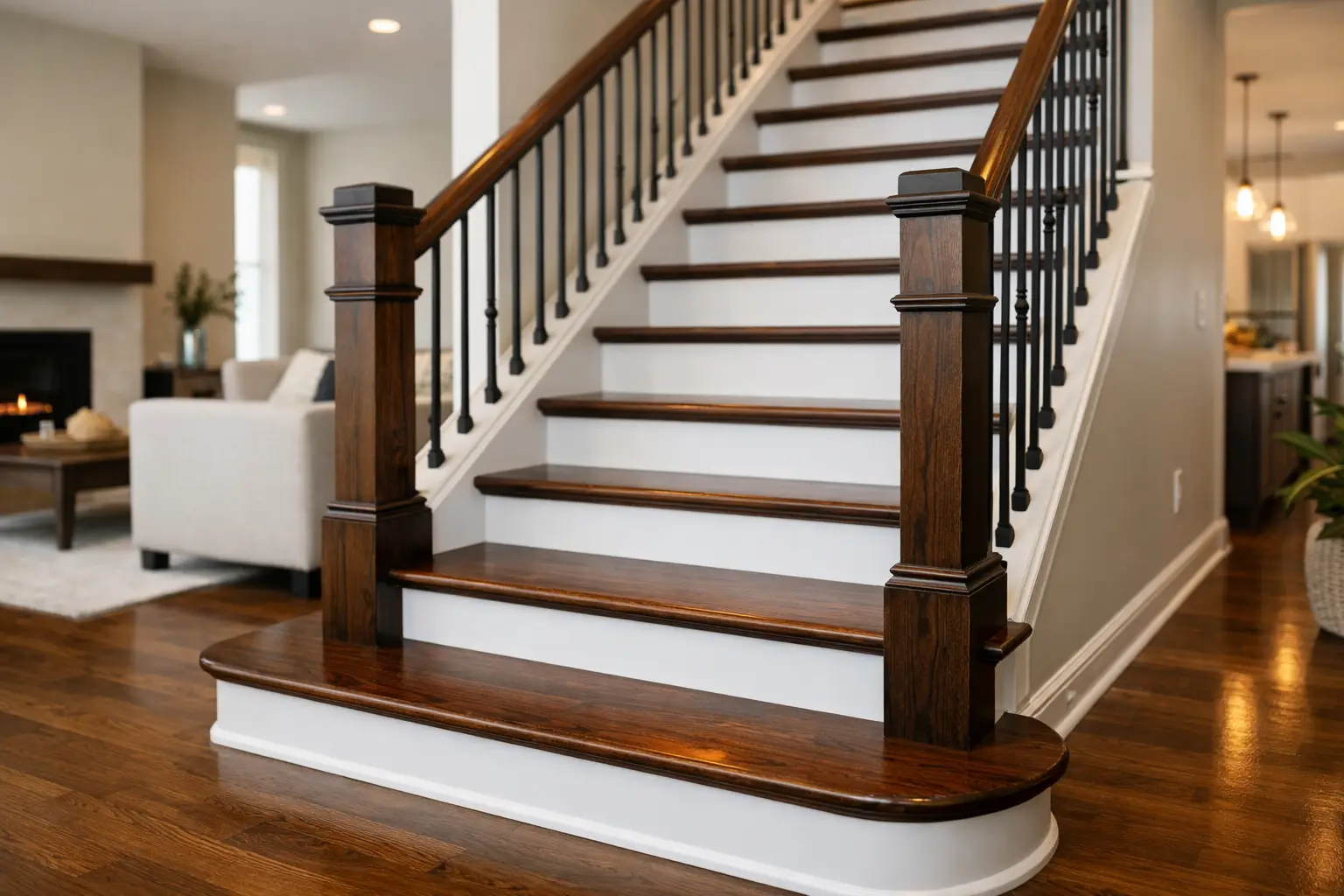
Refinishing original hardwood treads can reveal character that has been hidden under aging carpet or thick layers of paint. A deep espresso stain may suit a contemporary main-floor remodel, while a natural oak tone can brighten a narrow entry and work well with white walls. Painted risers and a stained handrail can create contrast without making the staircase feel overly formal.
Appearance is only part of the decision. Stairs receive concentrated foot traffic, especially in busy family homes. A finish that looks excellent in the first month but wears through on the leading edge of each tread will quickly become a frustration. Surface preparation, compatible coatings, and adequate curing time matter as much as color selection.
When Staircase Refinishing Is the Right Move
Refinishing is often a practical choice when the existing staircase is structurally sound and the treads have enough material remaining to sand. Solid hardwood stairs are generally strong candidates. Some engineered components, veneer stair caps, and previously altered treads require a closer look because aggressive sanding can expose an unsuitable substrate.
Carpet removal can also reveal surprises. It is common to find tack-strip damage, nail holes, paint drips, uneven stain, or tread edges that have been patched over the years. Most cosmetic issues can be repaired as part of the refinishing process. Significant movement, water damage, cracked treads, or loose newel posts may call for targeted repair or partial replacement before any finishing work begins.
Refinishing, rebuilding, or replacing components
The right scope depends on what is beneath the existing finish. If the treads are in good condition but the handrail and balusters date the space, refinishing the wood while replacing selected components can deliver a substantial visual upgrade. If the rise, run, headroom, or guard system needs to be changed as part of a larger renovation, a more extensive staircase project may be necessary.
This distinction matters for budget and compliance. Cosmetic refinishing usually does not involve permits. Structural changes, new guards, altered layouts, or work connected to broader renovations can trigger Ontario Building Code and local bylaw considerations. An experienced renovation team should identify those issues early, rather than treating them as a surprise after demolition has begun.
Choosing a Finish That Works in Real Life
The most successful staircase finishes support the rest of the home rather than competing with it. Before selecting a stain, look at the flooring in the entry, hallways, and main living areas. Exact matching is not always the goal. In fact, forcing two different wood species to match perfectly can produce an artificial result. Coordinating undertones and contrast is usually more reliable.
A light natural finish can make a compact foyer feel larger and shows the grain of quality wood. Mid-tone browns offer warmth and are forgiving of everyday dust. Very dark stains create drama, but they tend to show scratches, pet hair, and fine debris more readily. Painted stairs can be a smart option for older homes with inconsistent wood quality, though painted treads require a durable coating system designed for heavy traffic.
Sheen also deserves attention. High-gloss finishes reflect light but can emphasize minor imperfections and feel slick underfoot. Satin and matte finishes are popular in family homes because they offer a more understated appearance and are generally easier to live with. The best choice depends on lighting, household traffic, and the level of maintenance the homeowner expects.
Safety should guide finish decisions as well. Smooth, well-prepared treads are essential, but a staircase should not become slippery in socks. The handrail needs to feel solid, baluster spacing must be appropriate, and transitions at the top and bottom of the stairs should be clearly defined. These details protect the people using the stairs while making the finished work feel substantial.
Planning a Staircase Refinishing Project
A managed process prevents the common problems that turn a focused upgrade into a messy interruption. The first step is documenting the current conditions: tread material, railing stability, visible damage, carpet removal requirements, adjacent flooring, and access through the home. This assessment helps establish a clear scope and quote before work starts.
Preparation is where much of the craftsmanship happens. The work area should be protected from dust migration, especially when the staircase connects directly to living areas. Existing coatings are removed carefully, damaged sections are repaired, and treads are sanded consistently so they accept stain evenly. Rushing this stage can leave visible swirl marks, blotches, and uneven edges that no final coat will hide.
After stain or paint is applied, the protective topcoat must be compatible with the chosen finish and appropriate for stair traffic. Dry-to-touch is not the same as fully cured. A realistic schedule accounts for coat application, drying, curing, and safe access for the household. In some homes, contractors can plan the work in stages to preserve a route between floors, but that depends on the layout and the products being used.
Coordinate the stairs with nearby work
Staircase refinishing is especially effective when coordinated with main-floor flooring, wall painting, trim upgrades, or an entryway remodel. Completing the stairs in isolation can work well, but sequencing matters. New flooring and baseboards may affect transitions at the bottom of the staircase, while wall painting can be cleaner before final rail and trim touchups.
One accountable renovation team can coordinate these decisions, protect finished surfaces, and keep the project roadmap clear. That is particularly valuable in older GTA homes, where leveling issues, unexpected framing, and layers of previous renovations often appear once materials are removed.
What Affects Cost and Timeline
No two staircases have the same refinishing scope. A straight run with solid treads and minimal repairs is very different from a curved staircase with landings, detailed balusters, and multiple coats of old paint. The condition of the wood, the number of steps, railing work, repair needs, access, containment requirements, and finish specification all affect the final quote.
Homeowners should be cautious about estimates that only account for sanding and staining. A complete scope should address prep, repairs, coatings, protection of nearby finishes, cleanup, and any required adjustments to railings or guards. Clear allowances and change-order communication are important when hidden conditions are discovered.
The goal is not simply to make the staircase look newer. It is to complete work that stands up to daily use, fits the home’s design direction, and does not create avoidable problems for the rest of the renovation schedule.
A well-finished staircase makes the trip between floors feel like part of the home, not an afterthought. With careful assessment, durable materials, and accountable workmanship, it can become one of the most satisfying upgrades in a main-floor transformation.