Quartz Versus Granite Countertops: Which Fits?
A countertop is not a small finish decision. It is the surface that handles weekday breakfasts, holiday prep, school projects, spills, and the daily wear that comes with a busy home. When homeowners compare quartz versus granite countertops, they are usually balancing more than appearance. They want a material that suits the way they live, supports the kitchen design, and protects the value of a major renovation.
Both can create a beautiful, high-performing kitchen. The better choice depends on your tolerance for maintenance, your cooking habits, the light in the room, and the character you want the finished space to have. A clear plan before fabrication also helps prevent surprises with seams, edge details, sink cutouts, and budget.
Quartz Versus Granite Countertops at a Glance
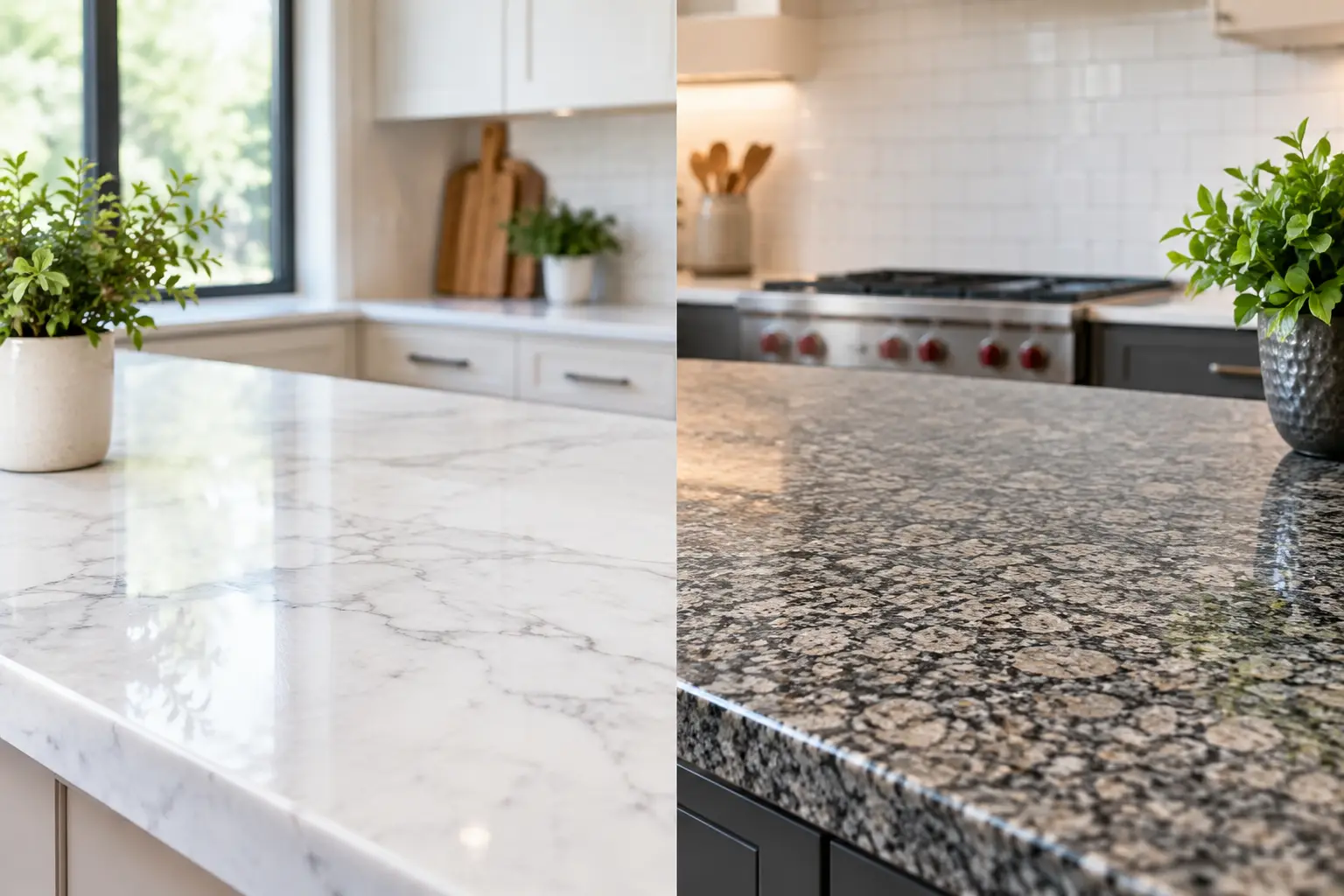
Quartz and granite are often grouped together because both are premium countertop choices, but they are made differently. Granite is a natural stone cut from the earth, then shaped, polished, and sealed for kitchen use. Every slab has its own mineral pattern, movement, and color variation.
Quartz countertops are engineered surfaces. They typically combine crushed natural quartz with resins and pigments, creating a dense, nonporous slab with more controlled color and patterning. Some options have a clean, consistent look, while newer designs can closely resemble marble or natural stone.
That difference affects nearly every practical consideration, from maintenance to heat resistance. Neither material is automatically right for every home.
Daily Durability and Maintenance
For many households, maintenance is the deciding factor. Quartz is nonporous, so it does not need routine sealing. It resists common kitchen stains from coffee, wine, cooking oil, and sauce when spills are cleaned promptly. Mild soap, water, and a soft cloth are generally enough for daily care.
Granite is also durable, but it is porous to varying degrees. A quality sealer helps protect it from absorbing moisture and stains, yet that sealer must be checked and renewed periodically. The schedule depends on the specific stone, finish, and how heavily the kitchen is used. A reputable fabricator can explain the care requirements for the exact slab you select rather than relying on a one-size-fits-all promise.
Both materials resist scratches better than many laminate, wood, or solid-surface alternatives. Still, neither countertop should replace a cutting board. Repeated knife use can dull blades and eventually mark or wear a surface.
Heat Is Where Granite Has an Edge
Granite generally handles heat better than quartz. A hot pan placed directly on granite is less likely to cause immediate damage, although trivets remain the safest habit for any finished surface.
Quartz contains resin, and high heat can discolor, scorch, or crack it. The risk is especially relevant beside cooktops, near wall ovens, or in homes where cookware is regularly moved from the stove straight to the counter. If you choose quartz, plan for trivets and consider the placement of heat-producing appliances during kitchen design.
Repairs Are Possible, but Not Invisible
A chipped granite edge can often be filled and blended by a qualified stone professional. Quartz can also be repaired in some cases, but a repair may remain visible depending on the color, pattern, and location of the damage. The best protection is thoughtful use and proper installation, especially around overhangs, corners, and undermount sink cutouts.
The Look: Consistency or Natural Variation
This is where personal preference should lead the decision. Granite delivers the depth and individuality of natural stone. One slab may have sweeping veins, crystalline flecks, quiet movement, or bold contrast. That variation can make a kitchen feel warm, established, and truly one of a kind.
The same quality can be a challenge for homeowners who want predictability. A small showroom sample cannot fully show the movement in a full granite slab. Whenever possible, view the actual slabs reserved for your project. This is particularly important when matching a dramatic island to perimeter counters or planning a full-height stone backsplash.
Quartz offers more visual control. It is available in solid colors, concrete-inspired finishes, subtle veining, and marble-look designs. This makes it easier to create a calm, tailored kitchen where the cabinetry, flooring, backsplash, and counters work together without competing for attention. It is a strong option for contemporary kitchens, condos, and renovations where a consistent finish is a priority.
Quartz is not always visually uniform. Veined designs can vary between slabs, and fabrication layouts still matter. Vein direction, seam placement, and bookmatching should all be discussed before the countertop is cut.
Cost Depends on More Than the Slab
It is tempting to ask whether quartz or granite costs less, but material category alone does not provide a reliable answer. Entry-level granite may be more affordable than premium quartz. Rare granite with dramatic movement can cost substantially more than a straightforward quartz selection. In either category, pricing changes with availability, slab size, thickness, and finish.
The installed price also reflects details that are easy to overlook during early planning. These include demolition and disposal of existing counters, templating, delivery access, sink and cooktop cutouts, edge profiles, waterfall ends, backsplash returns, seam work, and required support for overhangs.
A kitchen with a large island or several angled walls may need more material than its square footage suggests. Stone is sold in slabs, and the layout determines how efficiently each slab can be used. A transparent quote should identify what is included so you can compare options accurately and avoid treating a low starting price as a complete project cost.
Installation Details That Protect Your Investment
Even an excellent slab can underperform if the cabinetry and installation are not properly prepared. Base cabinets must be level, securely fastened, and able to support the weight of the countertop. This is especially important in older Toronto-area homes, where floors and walls may have shifted over decades.
Countertops are usually templated after cabinets are installed and finalized. Do not schedule fabrication while cabinet changes, wall adjustments, or appliance selections are still unresolved. A late change to a range, sink, faucet, or backsplash can affect cutouts and clearances.
For both quartz and granite, discuss seams before installation. Seams are normal in many kitchens, particularly with long runs, L-shaped layouts, or large islands. A skilled fabricator places them where they are structurally appropriate and as discreet as possible, but they do not disappear completely. Strong planning can keep them away from high-visibility work zones when the slab layout allows.
Also consider overhangs. Seating at an island often requires a cantilevered counter, hidden steel, corbels, or other support. The right method depends on the material thickness and depth of the overhang. This is not a detail to improvise after the countertop arrives.
Which Countertop Fits Your Home?
Choose quartz if you want minimal upkeep, reliable stain resistance, and a more controlled appearance. It is often a practical fit for active family kitchens, rental or resale-focused upgrades, and homeowners who prefer a polished, consistent design without periodic sealing.
Choose granite if you value natural character, want stronger heat tolerance, and are comfortable with occasional maintenance. It is especially compelling when you find a slab whose movement becomes the focal point of the room. Granite can bring depth to painted cabinetry, warm wood finishes, and traditional or transitional kitchen designs.
There are also situations where the decision should not be made in isolation. If your kitchen receives strong direct sunlight, discuss UV exposure with your countertop supplier. If you are renovating a basement bar, laundry room, or bathroom vanity, daily use may make the maintenance advantage of quartz more meaningful. If you are designing an entertainer’s kitchen around a large range, granite’s heat performance may carry more weight.
At Finishing Touches Design & Renovations, countertop selection is best handled as part of the larger renovation plan, not as a final shopping trip. Cabinet layout, plumbing locations, appliance specifications, backsplash height, lighting, and installation sequencing all affect how the finished surface looks and performs.
The right countertop should feel like it belongs in the room and in your routine. Bring home samples, view full slabs when choosing granite, and test each option against the way your family actually cooks, cleans, and gathers. That extra care at the selection stage helps turn a beautiful material into a kitchen feature you will appreciate every day.