Bathroom Exhaust Fan Reviews for Better Renovations
A beautiful bathroom can still feel unfinished if the mirror stays fogged, the ceiling paint starts to peel, or damp towels never seem to dry. Bathroom exhaust fan reviews can help homeowners narrow the options, but the model with the strongest rating is not automatically the right choice for your room. Airflow, noise level, duct routing, controls, and correct installation all determine whether a fan will actually protect the space.
For a Toronto or GTA bathroom renovation, the fan should be treated as part of the room’s moisture-management system, not as an afterthought selected near the end of the project. The right unit supports a healthier, more comfortable bathroom while helping protect drywall, tile assemblies, cabinetry, and finishes from repeated humidity exposure.
What Bathroom Exhaust Fan Reviews Should Really Tell You
Many online reviews focus on the first things a homeowner notices: whether a fan is quiet and whether it moves air. Those are useful starting points, but a dependable renovation decision requires more context. A fan can be nearly silent yet underpowered for a large bathroom. It can have impressive airflow on its specification sheet yet perform poorly when connected to a long, restricted, or poorly insulated duct run.
Read reviews for patterns rather than isolated praise or frustration. Consistent comments about vibration, weak airflow, difficult grille cleaning, unreliable humidity sensors, or early motor failure deserve attention. So do reports from homeowners with bathrooms similar to yours, particularly when they describe room size, shower use, ceiling height, and whether the fan is connected to a long exterior vent route.
The best bathroom exhaust fan reviews also distinguish between the product and the installation. A noisy fan is sometimes a poor product, but it can also be the result of a loose housing, an undersized duct, sharp bends, or a damper that rattles in windy weather. During a renovation, those details are manageable when addressed before the walls and ceiling are closed.
Start With Airflow, Measured in CFM
Airflow is measured in cubic feet per minute, or CFM. A common baseline is at least 1 CFM per square foot of bathroom floor area, with a practical minimum of 50 CFM for a typical bathroom. That baseline is not a universal answer. A bathroom with a large walk-in shower, a freestanding tub, high ceilings, no operable window, or frequent family use may benefit from more capacity.
For example, a compact powder room usually does not need the same equipment as a primary ensuite with a double vanity and oversized glass shower. Increasing capacity can improve moisture removal, but oversized equipment is not automatically better. If the ductwork cannot support the fan’s airflow, or if the fan is far louder than the household will tolerate, it may run less often and deliver worse real-world results.
A renovation team should assess the whole path from the bathroom ceiling to the exterior termination. That includes duct diameter, total length, elbows, insulation, and the exterior vent cap. Exhaust air needs to leave the home, not be discharged into an attic, soffit cavity, or another concealed area where moisture can cause damage.
Do Not Judge Airflow by the Grille
A larger grille does not prove that a fan is more powerful. Similarly, a fan may feel underwhelming at the ceiling because the test is not obvious to the hand. Moisture removal is measured over time, not by a quick check beneath the grille.
After installation, a good practical test is whether normal shower humidity clears within a reasonable period and whether condensation stops collecting on mirrors, windows, and cooler surfaces. Persistent moisture may point to insufficient CFM, but it can also reveal a ducting issue or an unusually airtight room that needs a better ventilation strategy.
Noise Ratings Matter More Than Most Homeowners Expect
Fan noise is measured in sones. Lower numbers mean quieter operation. A fan rated around 0.3 to 1.0 sones is generally very quiet, while ratings above 2 sones are noticeably audible in most bathrooms.
Quiet performance is worth considering because people are more likely to use a fan that does not dominate the room. This matters in bedrooms adjacent to an ensuite, in condo bathrooms, and in homes where children’s bath schedules overlap with early mornings or bedtime.
There is a trade-off. Some homeowners prefer a little sound for privacy, especially in a powder room near a living area. Others want the fan nearly inaudible. The right decision depends on where the bathroom sits in the home and how it is used. A slightly louder, well-installed fan can also be preferable to a whisper-quiet unit that is not adequately sized for the moisture load.
Choose Controls That Match How Your Household Lives
A basic wall switch is simple and reliable, but it depends on someone remembering to use it and leave it running long enough after a shower. For busy family bathrooms, automatic controls often make more sense.
Humidity-sensing fans can activate when moisture rises and shut off after the room dries. Timers allow the fan to keep running for a selected period after the light is turned off. Motion sensors can be convenient in powder rooms, although they may not provide enough run time after a shower without a timer or humidity setting.
Combination fan-light units can simplify a small bathroom ceiling, and models with integrated night lights can be useful for families. These conveniences should not distract from the basics: appropriate airflow, accessible service, proper exterior venting, and a control system that encourages consistent use.
When reading reviews, look for feedback on sensor sensitivity. Some humidity sensors react too late, run longer than expected, or respond to seasonal changes in household humidity. A knowledgeable installer can help position the unit and recommend a control approach suited to the bathroom rather than relying on automation alone.
Installation Is Where Performance Is Won or Lost
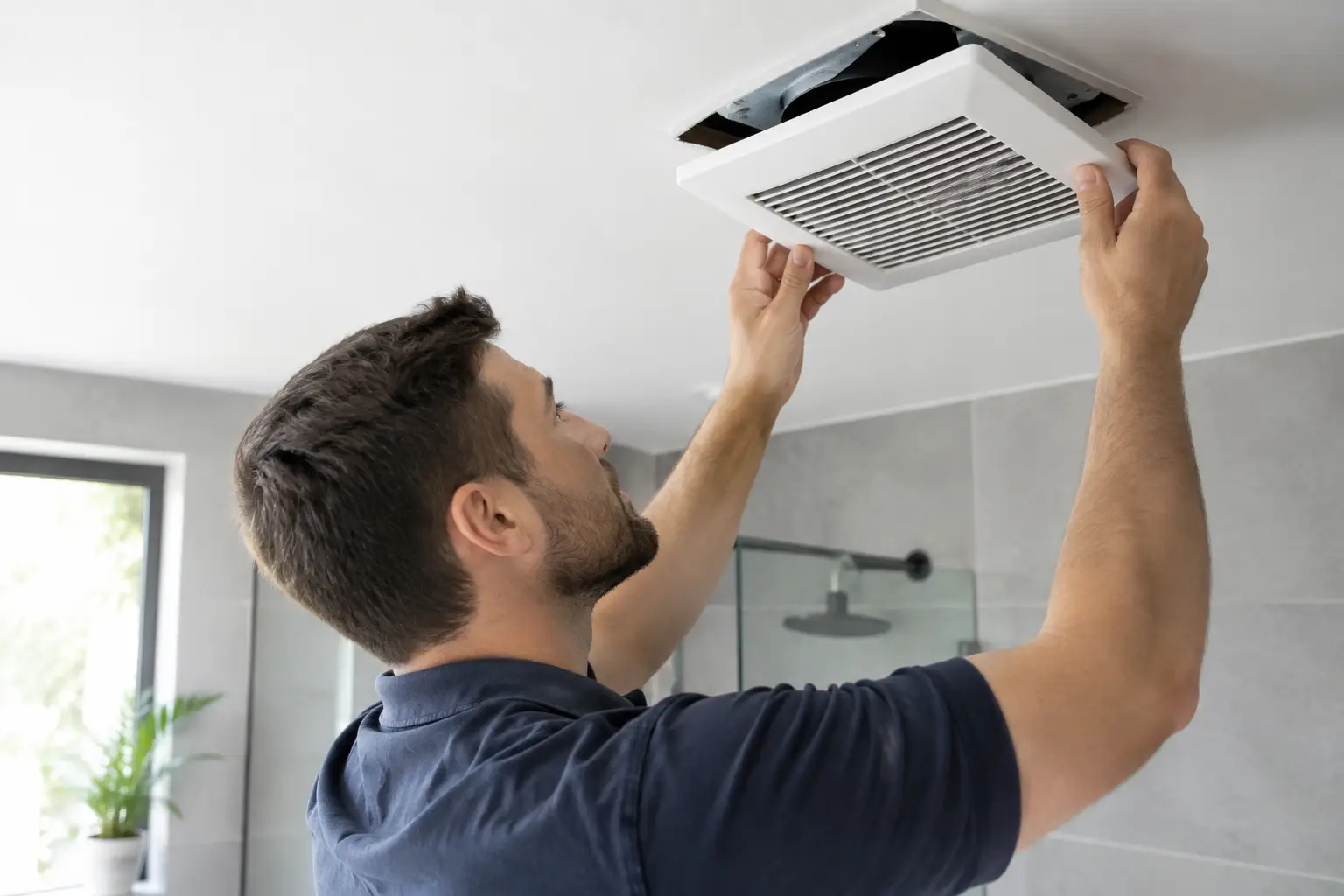
Even a highly rated fan cannot overcome poor workmanship. The housing must be securely mounted, the duct must be properly sized and supported, and joints should be sealed to reduce air leakage. In cold climates, insulated ductwork helps limit condensation inside the run.
The exterior termination also matters. It needs to exhaust efficiently while limiting cold air, pests, and wind-driven rain from entering the duct. A poorly selected or blocked exterior cap can reduce airflow and create annoying backdraft noise.
Electrical work, fan placement, and ventilation requirements should be planned with the renovation scope and applicable local requirements in mind. This is especially relevant when moving plumbing, reconfiguring walls, adding a bathroom in a basement, or renovating an older Toronto home where existing duct routes may be limited. Coordinating trades early avoids a common problem: a finished ceiling with no practical route for a properly vented fan.
At Finishing Touches Design & Renovations, we approach bathroom ventilation as part of the complete renovation plan. That means coordinating the fan with lighting, electrical work, insulation, ceiling design, duct routing, and the final finish details, rather than treating it as a last-minute fixture decision.
Common Review Complaints and What They May Mean
A few recurring complaints can help homeowners ask better questions before buying. Rattling often points to loose mounting, a vibrating duct, or a damper issue. Weak suction may be caused by duct restrictions instead of a defective motor. Water dripping from a grille can indicate condensation in an uninsulated or poorly sloped duct, not necessarily a failed fan.
Complaints about a fan that runs constantly often involve humidity-sensor settings or a bathroom with consistently high moisture levels. On the other hand, a fan that stops too quickly may need a timer adjustment or a different control strategy. These are reasons to investigate the whole installation, not simply replace the appliance.
Reliability reviews are valuable, but consider the length of ownership. A five-star rating posted the week of installation says little about long-term performance. Reviews written after a full heating season or a year of daily use offer more meaningful insight into motor durability, noise changes, sensor behavior, and ease of cleaning.
A Better Way to Make the Final Choice
Before selecting a fan, define the bathroom’s size, ceiling height, shower type, number of users, desired noise level, and available duct path. Then compare models with those conditions in mind. It is also wise to confirm service access, replacement parts availability, warranty terms, and whether the grille style works with your ceiling finish.
The most satisfying bathroom is not just visually polished on reveal day. It remains dry, comfortable, quiet, and easier to maintain years later. Choose the exhaust fan as carefully as the tile and vanity, and give the installation details the same attention as the finishes you can see.