Best Tiles for Heated Floors in Your Home
A heated floor should feel like a quiet luxury you notice every winter morning, not a renovation detail that creates problems beneath your feet. Choosing the best tiles for heated floors affects how quickly the room warms up, how evenly heat travels across the surface, and how well the finished floor stands up to daily use. For bathrooms, basements, entryways, and kitchen-prep areas, the right tile and installation system make all the difference.
Tile is one of the most effective finishes over electric and hydronic radiant heat systems. Still, not every tile material performs the same way, and a beautiful product can underperform if the subfloor, membrane, grout, or installation method is wrong. A well-managed renovation looks at the full floor assembly before selecting the finish.
Why Tile Works So Well With Radiant Heat
Radiant heating warms the floor surface, which then gently heats the room. Tile is especially well suited to this process because it conducts and retains heat better than most flooring materials. Once it reaches the desired temperature, it delivers a consistent warmth underfoot without the hot and cold zones that can occur with forced-air heating.
Tile also offers practical advantages in rooms where moisture is a concern. In a bathroom or below-grade basement, porcelain or ceramic tile resists water, is easy to clean, and remains dimensionally stable through seasonal changes. That stability matters in Toronto-area homes, where dry indoor winters and humid summers can put pressure on poorly planned flooring installations.
The trade-off is that tile itself does not feel warm without the heating system running. It also requires a sound, properly prepared substrate. Cracked grout or loose tile is rarely just a tile problem. It often points to subfloor movement, inadequate support, or a missed step in the installation process.
The Best Tiles for Heated Floors: Porcelain Leads
For most residential renovations, porcelain tile is the strongest overall choice. It is dense, durable, low-absorption, and highly efficient at transferring radiant heat. It is available in nearly every look, from clean large-format stone visuals to warm wood-look planks and textured concrete finishes.
Porcelain is particularly practical for bathroom floors, mudrooms, basement suites, and high-traffic family spaces. It handles water well, resists scratching, and does not require the ongoing sealing associated with many natural stones. For homeowners balancing a polished finish with long-term maintenance, it is often the most dependable option.
Large-format porcelain can create a refined, contemporary look with fewer grout lines. However, it requires an especially flat floor and careful layout. In older homes, leveling and substrate preparation may be needed before installation. Skipping that work to protect the initial budget can lead to lippage, hollow spots, or uneven grout joints later.
Ceramic Tile Is a Smart Value Choice
Ceramic tile is another excellent choice for heated floors, especially in bathrooms and lower-traffic areas. It conducts heat well and comes in an extensive range of colors, patterns, and sizes. In many projects, it offers a lower material cost than porcelain while still delivering a durable, attractive surface.
The main difference is density. Ceramic tile is generally more porous and less impact-resistant than porcelain, so it may not be the first recommendation for a busy entryway or a hardworking kitchen. For a guest bath, powder room, or a carefully designed primary bathroom, however, quality ceramic can be a very good fit.
Natural Stone Delivers Character, With More Maintenance
Natural stone can work beautifully with radiant heat. Marble, slate, limestone, and travertine all conduct heat effectively and bring depth that manufactured materials cannot fully duplicate. A heated stone floor in a primary bathroom can feel exceptional, particularly in a home where the design calls for timeless, natural finishes.
Stone requires more commitment than porcelain. Many varieties need sealing, and some are more vulnerable to staining, etching, or surface damage. Marble can react to acidic products, while softer limestone and travertine may show wear over time. Material selection should reflect how the room will actually be used, not only how it will look on installation day.
Stone also varies in thickness and composition. An experienced installer plans for this variation and confirms that the floor structure can support the finished assembly. This is especially relevant during renovations in older homes, condos with height limitations, and projects involving transitions to existing hardwood or engineered flooring.
What About Glass, Mosaic, and Cement Tile?
Smaller-format mosaic tile can be a strong choice for heated bathroom floors, especially in shower-adjacent areas where additional grout lines improve slip resistance. Porcelain mosaics are practical and durable, while stone mosaics provide a more upscale look when properly sealed and maintained.
Glass tile is usually better suited to walls, accents, or backsplashes than main floor areas. It can be more prone to scratching and may not offer the traction needed for a wet bathroom floor. If it is used on a floor, the product must be specifically rated for that purpose.
Cement tile has distinctive color and pattern, but it is porous and maintenance-heavy compared with porcelain. It can be compatible with radiant heat, but it requires careful sealing and a homeowner who is comfortable with natural patina and ongoing care. It is a design-driven choice rather than the easiest long-term solution.
Tile Size, Finish, and Grout Matter Too
The material is only one part of the decision. A glossy tile may look striking in a showroom but can become slippery in a wet bathroom. For floor applications, a matte or lightly textured finish generally provides better traction without sacrificing style.
Tile size should suit the room and the substrate. Large tiles can make a compact bathroom feel more open, but they demand a flat installation surface. Smaller tiles are easier to slope toward a drain in shower areas and can work well on floors with more complex layouts.
Grout selection also affects performance and upkeep. Narrow joints can create a streamlined appearance with rectified porcelain, while wider joints may better suit handmade or natural stone tile. In high-use areas, stain-resistant grout helps preserve a clean finish. Grout color is not just a design decision – it influences how easily the floor hides everyday wear.
The Installation Details That Protect Your Investment
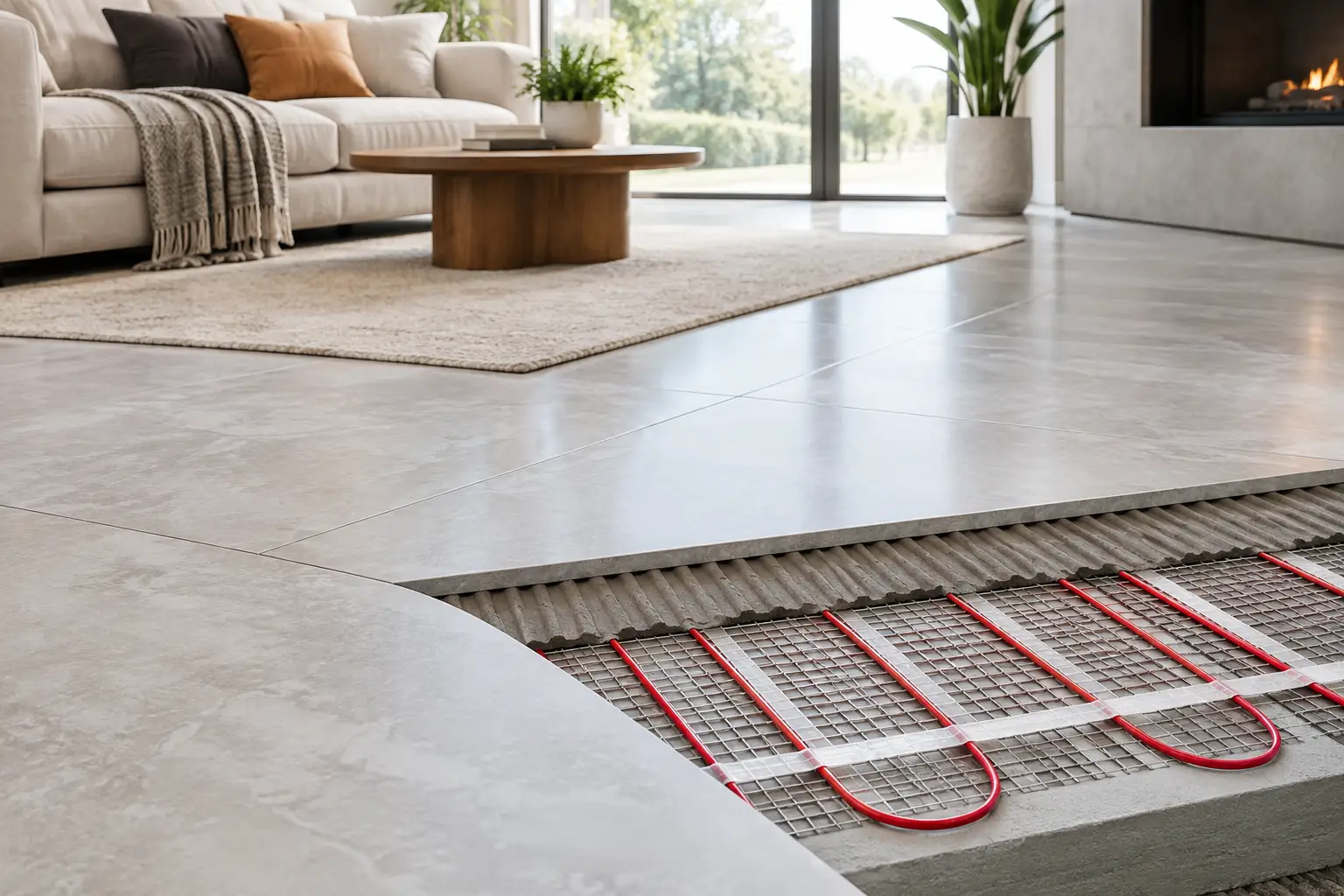
A radiant floor system must be installed as part of a complete, compatible assembly. The heating cables or mats need proper spacing, secure placement, and testing before, during, and after tile installation. The thermostat sensor must be positioned correctly, because it controls the comfort and efficiency of the system.
Equally important is the subfloor. Wood-framed floors may need reinforcement, an approved tile underlayment, and a crack-isolation or uncoupling membrane. Concrete basement slabs should be evaluated for moisture, cracks, and levelness before work begins. A heating system cannot compensate for an unstable or damp substrate.
The setting materials must also be rated for radiant heat applications. Flexible thinset mortar and appropriate movement joints allow the assembly to handle normal expansion and contraction. These are not visible finishing details, but they are essential to a floor that remains secure through years of temperature changes.
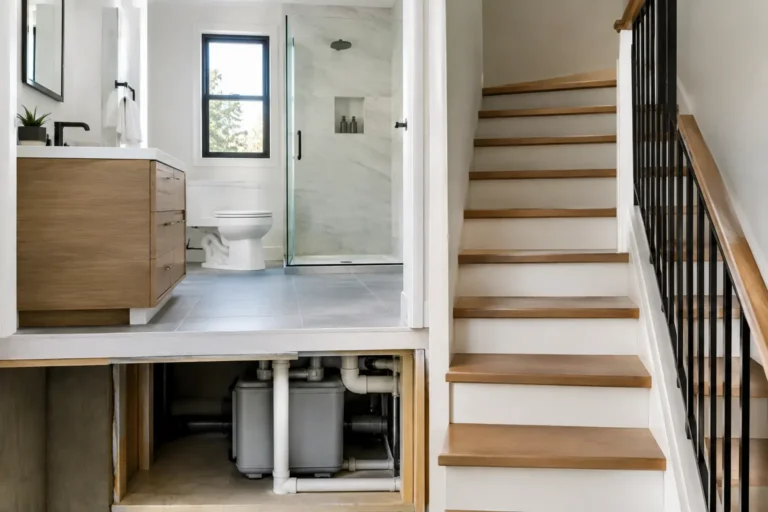
In a bathroom renovation, floor height deserves early attention. Adding a heating mat, membrane, thinset, and tile raises the finished floor. The renovation plan should account for door clearances, vanity installation, toilet flange height, and transitions to hall flooring before construction begins.
How to Choose the Right Tile for Your Room
Start with the room’s demands. A busy family entryway benefits from durable, slip-resistant porcelain. A primary bathroom may justify natural stone if the maintenance expectations are clear. A basement suite needs materials that can manage below-grade conditions and support a comfortable, resilient finished space.
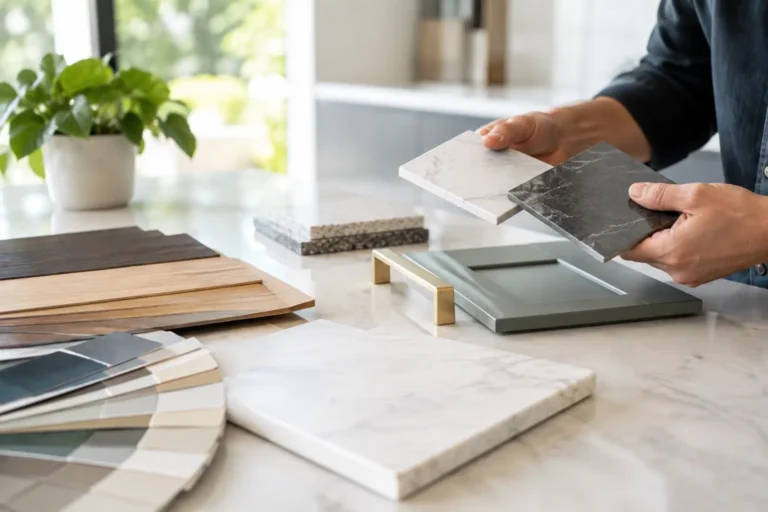
Then consider the appearance you want to live with for years. Light tile can make a smaller room feel brighter, while darker tones can ground a larger bathroom or basement. Wood-look porcelain adds warmth without the moisture concerns of real wood, and stone-look porcelain offers a refined finish with fewer maintenance requirements than natural stone.
Finally, make the selection alongside the renovation plan, not after it. The best results come from coordinating tile thickness, heating-system type, waterproofing, floor transitions, electrical work, and layout before installation starts. A single accountable renovation team can identify those details early, keep the scope clear, and prevent costly changes once the floor is underway.
For most homes, porcelain provides the best balance of heat performance, durability, design flexibility, and easy care. The right final choice should fit the way your household uses the room, the condition of the existing structure, and the level of maintenance you want after the renovation is complete. When those decisions are handled carefully, a heated tile floor becomes one of the most comfortable and lasting upgrades in the home.