What Causes Bathroom Mold Growth in GTA Homes?
A bathroom can look clean, freshly painted, and well cared for while moisture is quietly collecting behind the vanity, under the flooring, or inside an exterior wall. That is why understanding what causes bathroom mold growth matters before the issue becomes a larger repair. In GTA homes, especially older properties, mold is rarely just a housekeeping problem. It is usually a sign that moisture is not leaving the room as it should.
Mold needs three basic conditions: moisture, a surface with something organic to feed on, and enough time to establish itself. Bathrooms supply all three when ventilation, plumbing, insulation, or finishing details fall short. The good news is that most causes can be identified and corrected with the right investigation and renovation plan.
What Causes Bathroom Mold Growth?
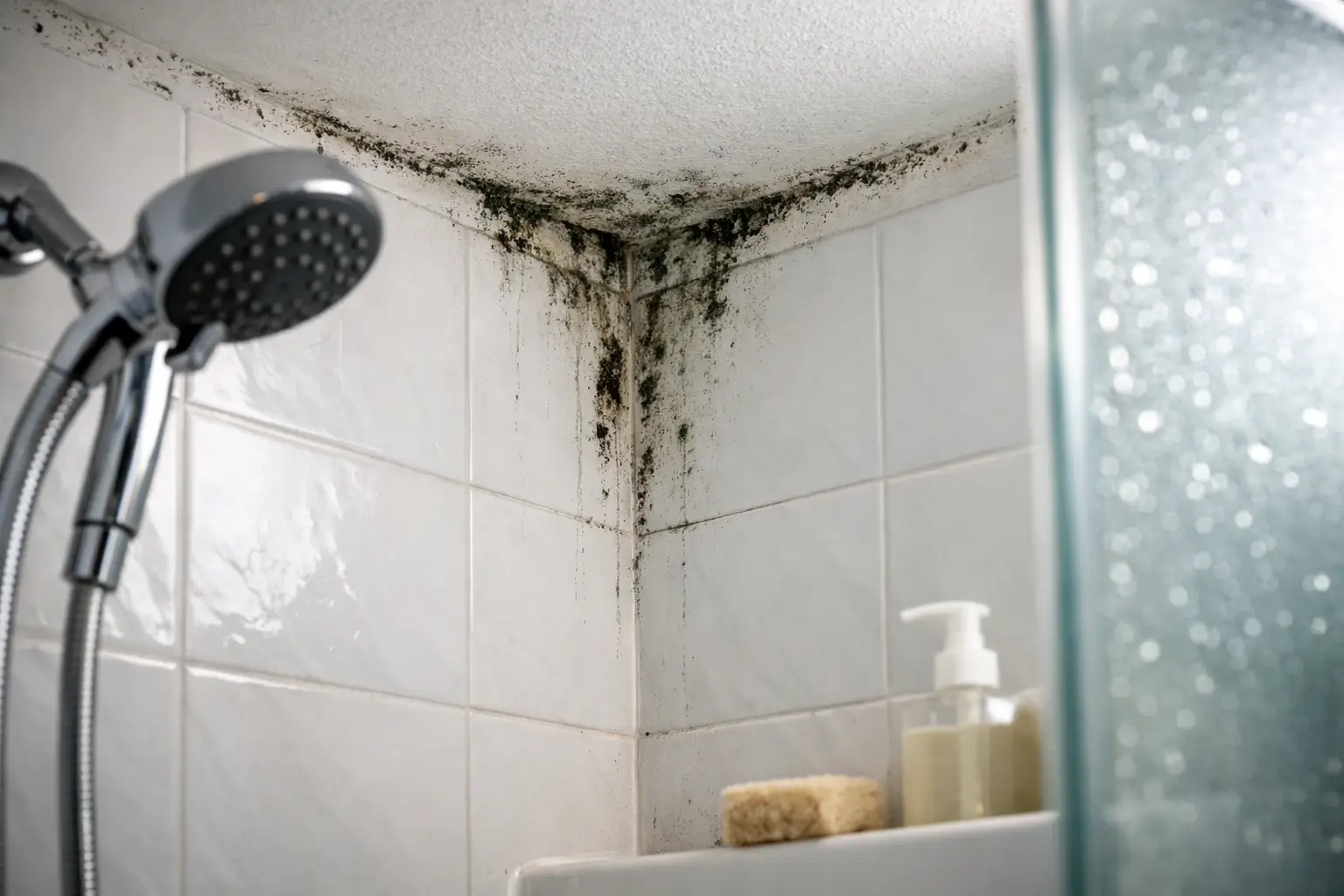
The primary cause is persistent humidity. A hot shower releases a surprising amount of water vapor into a small enclosed space. If that vapor is not exhausted outdoors quickly, it settles on cooler surfaces such as walls, ceilings, windows, mirrors, tile grout, and the back of cabinetry.
Drywall paper, dust, wood framing, caulking residue, and soap buildup can all provide food sources for mold. Tile itself is not a food source, but grout, failed caulking, and the materials behind tile can hold moisture. A bathroom does not need an obvious flood or a dramatic leak to develop a problem. Repeated dampness after daily showers is enough.
Toronto’s cold-weather season can make the issue more noticeable. Warm indoor air hits a cold exterior wall or window, condensation forms, and the surface stays damp longer than it would in a well-insulated, well-ventilated room. That is why dark spotting often appears first at ceiling corners, around window trim, or behind furniture placed against an outside wall.
An Exhaust Fan That Does Not Actually Exhaust
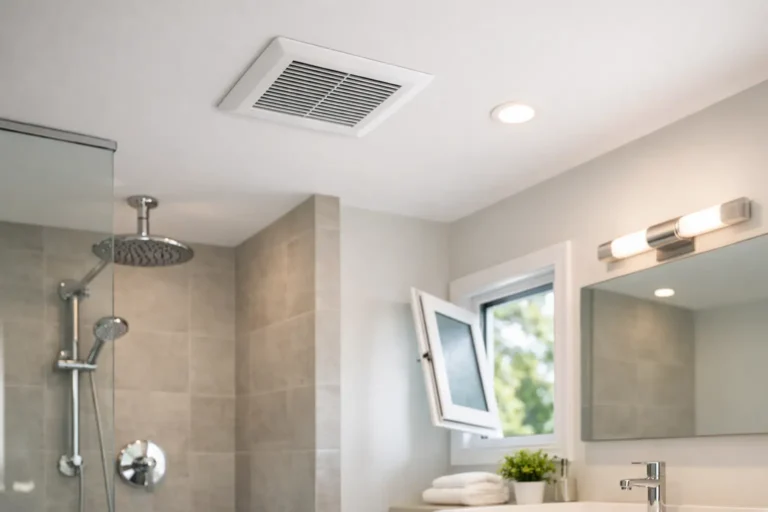
An underperforming bathroom fan is one of the most common reasons mold returns after cleaning. A fan may be noisy, run when the switch is on, and still fail to remove meaningful moisture. It may be too small for the room, clogged with dust, poorly ducted, or venting into an attic rather than fully outside.
The duct route matters as much as the fan. Long, crushed, disconnected, or uninsulated ducting reduces airflow and can allow condensation to collect inside the run. In some older homes, renovations have uncovered ducts that were never properly terminated outdoors. That moisture then ends up where it should not be – in attic insulation, framing cavities, or ceiling areas.
Running the fan only during a shower is often not enough. Humidity remains in the room after the water is turned off. A properly selected fan, connected to an appropriate exterior vent and controlled by a timer or humidity sensor, gives the room time to dry. The right specification depends on room size, layout, ceiling height, and whether the space includes a separate water closet or shower enclosure.
Plumbing Leaks and Failed Waterproofing
Some mold is visible. Other cases begin behind finished surfaces, where a slow leak can continue for months before there is a stain, soft floor, or musty smell. Common sources include a leaking toilet seal, loose supply connection, aging drain assembly, cracked shower valve connection, or a tub overflow that leaks only when the bath is filled too high.
Showers create another risk point. Tile and grout are decorative finish surfaces, not the waterproofing system. The protection comes from the membrane and properly detailed connections behind the tile. If a shower was installed without a continuous waterproofing system, or if seams, corners, niches, and plumbing penetrations were not properly sealed, water can reach the wall structure.
Warning signs include loose tiles, cracked grout that repeatedly returns, swollen baseboards, peeling paint, staining on a ceiling below the bathroom, and flooring that feels soft near a tub or toilet. These symptoms deserve more than another bead of caulk. Cosmetic repairs can hide a moisture issue temporarily while allowing damage to spread behind the wall.
Cold Surfaces, Poor Insulation, and Condensation
Not every bathroom moisture problem comes from plumbing. Condensation is often the culprit in homes with exterior bathroom walls, older windows, limited insulation, or air leaks around penetrations. When humid air reaches a surface below its dew point, it turns into water droplets. Over time, that repeated wetting can support mold growth.
This is particularly common around exhaust fan housings, recessed lighting, exterior corners, and plumbing openings where warm air can leak into colder cavities. A bathroom renovation is an opportunity to correct these conditions by improving insulation, sealing air gaps, and selecting appropriate ventilation components. However, the solution should be based on the specific source of moisture. Adding insulation alone will not solve a concealed pipe leak, and replacing a fan will not correct a failed shower membrane.
Everyday Habits Can Add to the Problem
Daily use affects how quickly a bathroom dries. Leaving wet towels piled in a small room, closing the door immediately after showering, or using bath mats that never fully dry can keep humidity elevated. A shower curtain that stays bunched up also traps water in its folds and along the tub edge.
These habits are contributing factors, not necessarily the root cause. A well-designed bathroom should be able to handle normal family use without developing mold. Still, practical routines help protect finishes: run the fan after bathing, spread curtains open to dry, hang towels where air can circulate, and wipe standing water from ledges and glass enclosures.
What Causes Bathroom Mold Growth Behind Finished Surfaces?
Hidden mold is more concerning because it may indicate an active moisture source or damaged building materials. The strongest clues are a persistent musty odor, recurring mold in the same location, unexplained peeling paint, warped trim, or a stain that grows after shower use.
At that point, surface cleaners are not a complete solution. Bleach or mold sprays may lighten visible staining, but they do not repair wet drywall, compromised framing, a leaking pipe, or failed waterproofing. Painting over the area can also trap evidence of the problem and make later repairs more involved.
A proper assessment identifies where the water is coming from, how far it has traveled, and which materials need removal. In a renovation setting, this may involve opening a targeted section of wall or ceiling, checking plumbing connections, reviewing fan ducting, and inspecting the shower or tub surround. The goal is to avoid both extremes: ignoring a real issue or demolishing more than necessary.
Renovation Fixes That Protect the Bathroom Long Term
When mold is tied to an aging or poorly built bathroom, a coordinated renovation can address the cause instead of repeatedly treating the symptom. That may include replacing a weak exhaust system, running insulated ductwork to the exterior, correcting plumbing connections, rebuilding a shower with a proper waterproofing assembly, and replacing moisture-damaged drywall or subflooring.
Material choices also matter. Moisture-resistant wallboard may be appropriate in certain bathroom areas, while cement-based backer board or other approved tile substrates are better suited behind tiled wet zones. A carefully detailed vanity installation can prevent water from entering wall and floor edges, and durable caulking at tubs, showers, and backsplashes should be maintained as part of normal home care.
For homeowners planning a more substantial update, it is wise to think beyond finishes. Moving plumbing, changing a layout, or adding a bathroom can affect ventilation, drainage, electrical work, insulation, and permit requirements. An integrated design-build team can coordinate these pieces, keep work aligned with Ontario Building Code and local requirements, and provide one accountable point of contact from investigation through final walkthrough.
Finishing Touches Design & Renovations approaches bathroom work with that long-term view: find the moisture source, protect the structure, and build a room that is as durable and functional as it is attractive. A clear scope and properly managed trades help prevent small hidden issues from becoming expensive surprises later.
If you see mold returning after cleaning, do not assume better cleaning products are the answer. Pay attention to when and where it appears, reduce moisture immediately, and have the underlying condition evaluated before investing in new paint, tile, or cabinetry. A dry bathroom is the foundation for a healthy, comfortable space that will hold up to everyday use.